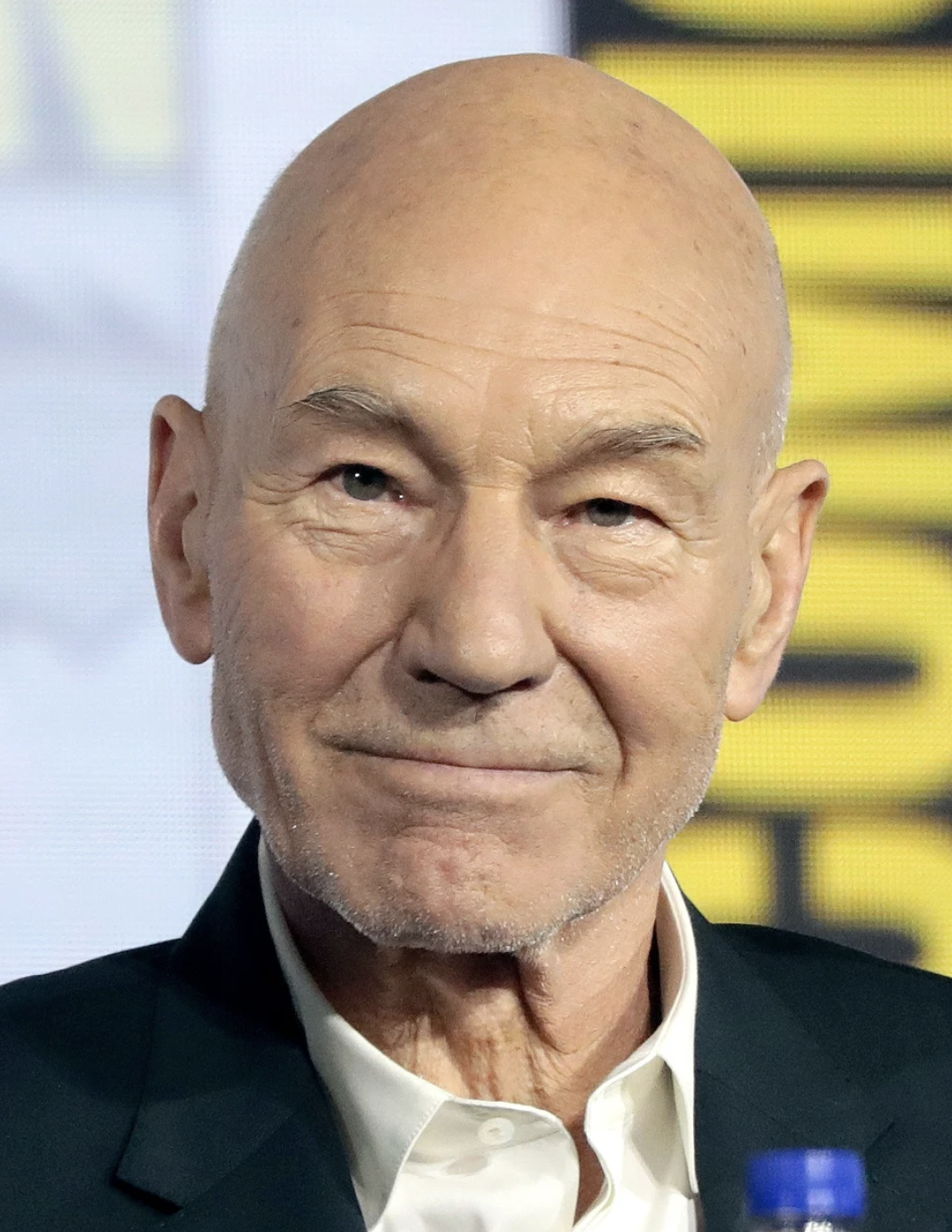
O Captain! My Captain!
This is my third attempt to put into words what Sir Patrick Stewart meant to me. So many beautiful tributes have already been written. What could I possibly say that hasn't been said?
Perhaps the only thing I can offer is my own experience.
As an actor and an artist, I believe that if you're doing your job properly, part of your soul finds its way into every role you play. Daniel Day-Lewis has spoken about the deeply personal nature of his work, and as someone who will always approach acting with a white-belt mentality (thank you, Sanford Meisner), I believe there's something profound in that.
But enough about the craft for a moment.
I want to talk about the soul of a man I never had the privilege of meeting, but whom I loved nonetheless.
Sir Patrick Stewart.

A Boy, His Father, and a Starship
My late father introduced me to Star Trek when I was a boy, with Star Trek II: The Wrath of Khan. I was hooked.
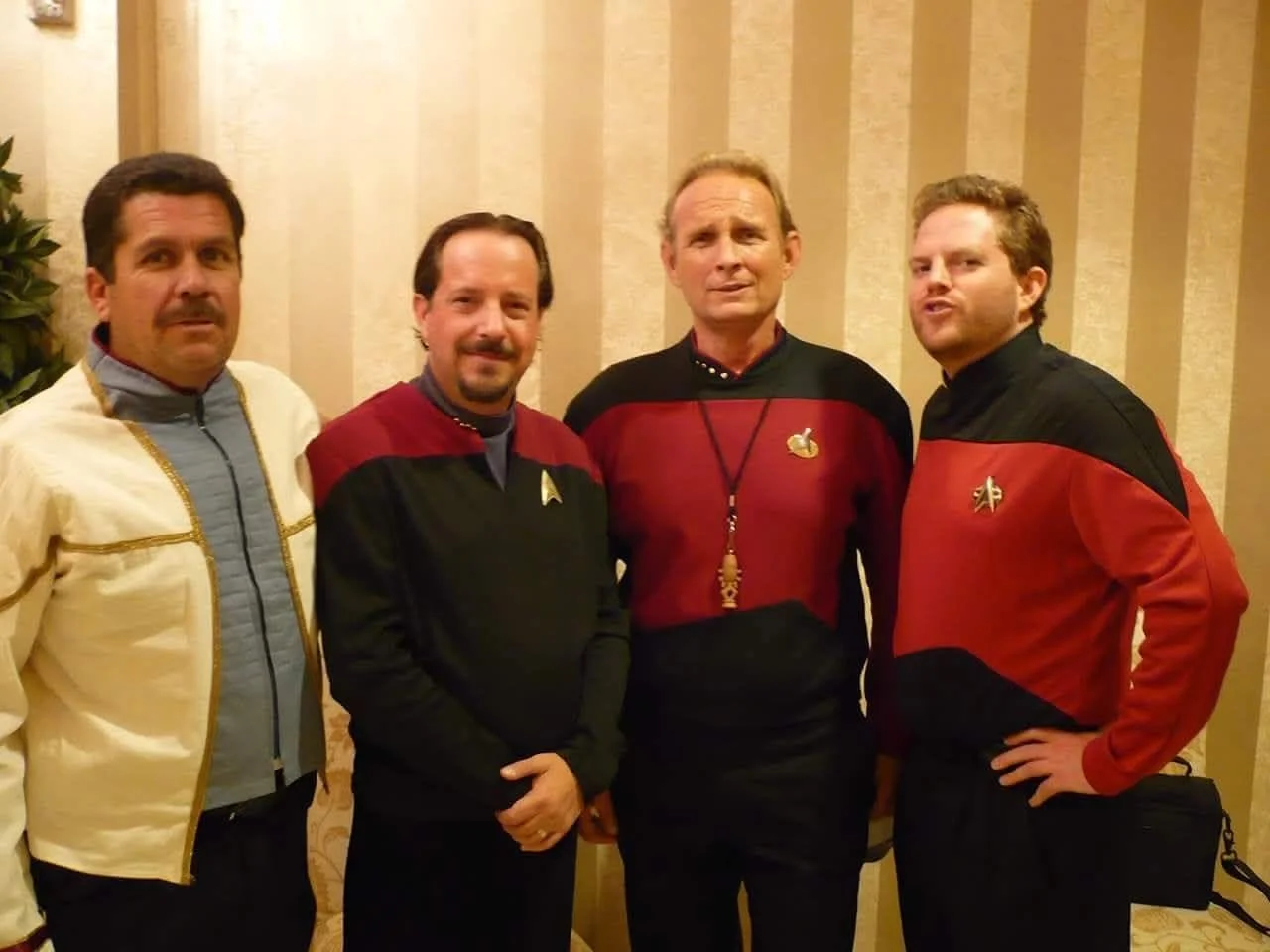
That time I attended a Star Trek themed wedding in 2010…NO REGRETS!!!
By the time Star Trek IV: The Voyage Home arrived on home video, we encountered a trailer for something entirely new: Star Trek: The Next Generation.
A new Enterprise. A new crew. A new captain. And who was this bald man?
There's a wonderful story about someone asking Gene Roddenberry why the captain of a 24th-century starship was bald. Surely humanity would have cured baldness by then? Roddenberry's answer, essentially, was that by the 24th century, nobody would care.
And no, sir, we did not. That bald man turned out to be one of the most glorious actors of his generation.
I remember watching an episode late in the first season of The Next Generation with my father. We both looked at each other and said something along the lines of, "You know, this is actually pretty good!"
And it was…well, sort of.
Let's face it: those first two seasons were pretty rough (Pajamas!), with some wonderful exceptions. It wasn't until the third season that the series truly found its footing.
Gene Roddenberry was a visionary, but even visionaries don't always see straight. Bless him.
Yet through some rather questionable material, Patrick Stewart brought dignity, conviction, and absolute professionalism to the role. He reportedly expected the series to last perhaps a year. Instead, it helped define the rest of his career.
And he taught me something about mine.
Whatever the material, elevate it. Give it everything you've got.
Whether I'm playing a sympathetic villain in a serious drama (A Faux Rose, one of my favorite early roles), or a sleazy boss in a vertical short (A Secret Baby for My Gigolo Boss, LOL), my responsibility—OUR responsibility as actors—is the same: show up, do the work, respect the material, respect my fellow actors, and give the best performance I possibly can.
Patrick Stewart did that. Every. Single. Time.
The Man Behind the Captain
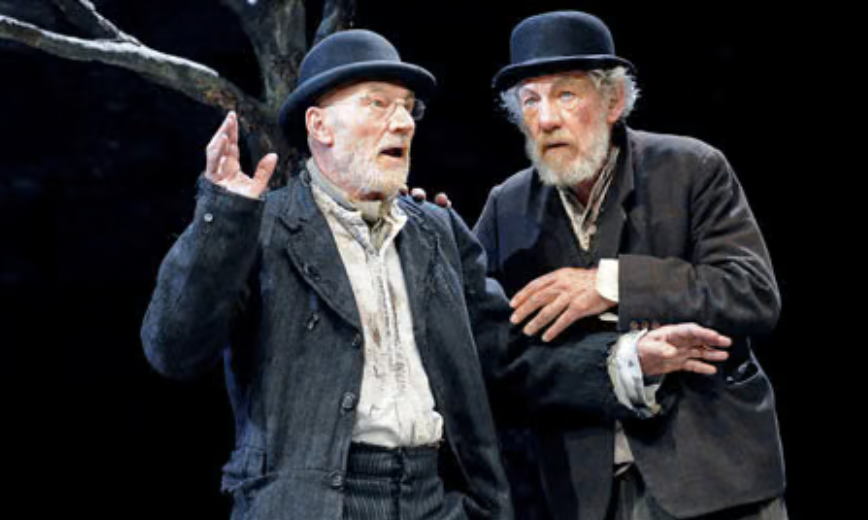
Sir Patrick with his BFF, Sir Ian Mckellen, waiting for that Godot dude :)
Like many people who find their way into the performing arts, I came to the profession carrying my own trauma. I'm no exception.
And when I look at Patrick Stewart's life, I cannot help but see it through that lens.
As a child, he witnessed his father abuse his mother. His father had returned from World War II deeply traumatized, something Stewart came to understand much later in life. That understanding didn't excuse what his father had done. But it gave him a fuller picture of the man.
What I find especially moving is what Patrick chose to do with that understanding.
He became an advocate for women experiencing domestic violence, supporting Refuge. He also worked with Combat Stress, helping military veterans suffering from psychological trauma.
He spoke of doing that work for his mother and for his father.
It touches something deep within me that a man who grew up witnessing terrible suffering eventually found a way to turn some of that pain into compassion for others.
What a legacy.
And that brings me back to Jean-Luc Picard.
What Jean-Luc Picard Taught Me About Being a Man
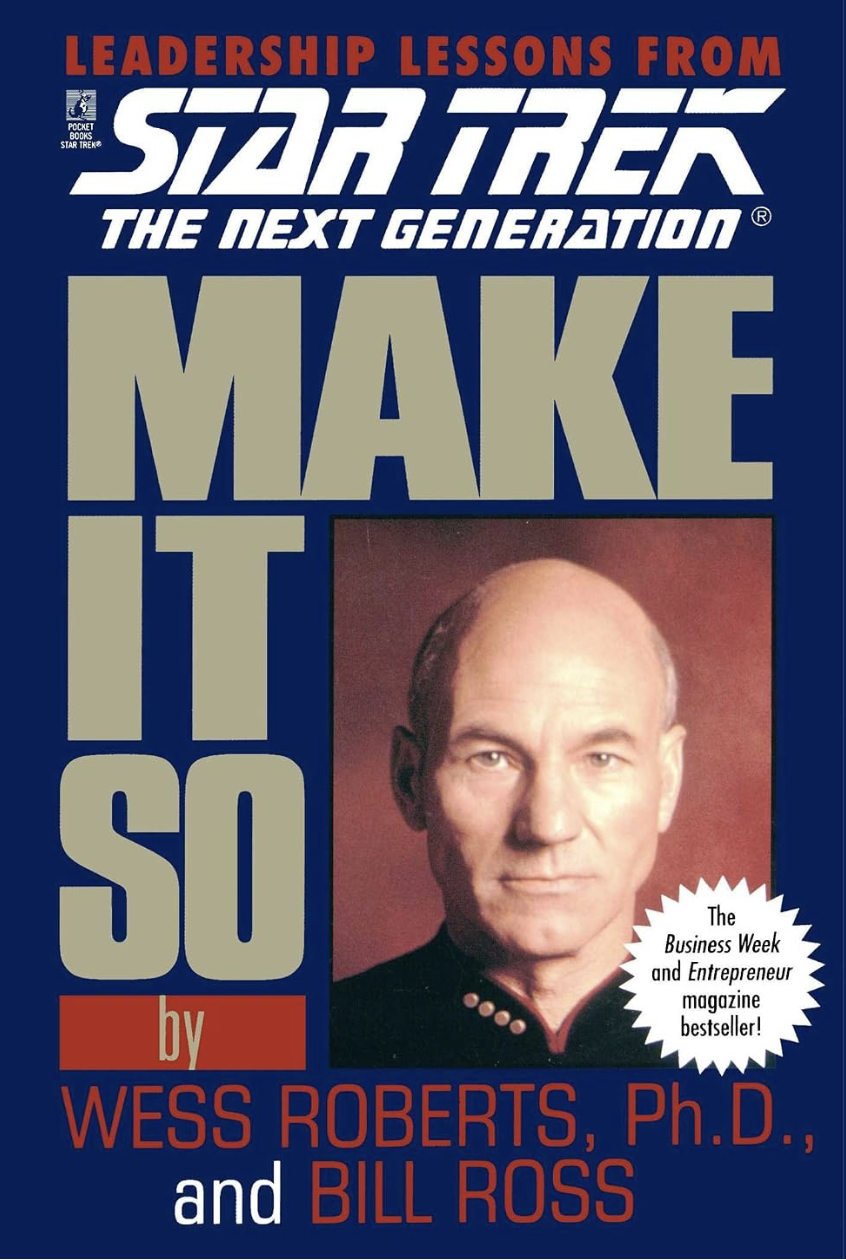
This wonderful book was on my late father’s bookshelf, along with finance & marketing books.
I became a lifelong Trekkie because of The Next Generation, its extraordinary ensemble, and the remarkable man at its center. I own all seven seasons on Blu-ray, so even if the Internet goes out, Jean-Luc and the crew of the Enterprise-D will always be there.
But there's something about Jean-Luc Picard that I want to address.
He represented, and still represents, one of the finest examples of positive masculinity I've ever seen portrayed on television.
He wasn't the biggest man in the room. He wasn't the strongest. He didn't swagger onto the bridge with his phaser hanging out. He didn't need to intimidate anyone to establish his authority.
Instead, he commanded through intelligence, integrity, compassion, and an unwavering commitment to his principles.
He taught us that leadership isn't about authoritarian power. It's about responsibility. Patience. Curiosity before judgment. Negotiation and diplomacy.
And, when diplomacy failed, being perfectly prepared to turn to Mr. Worf and give the order to fire all phasers.
We'll try being nice. But don't try us.
This is one of the reasons I'm so glad my children are taking Gracie Brazilian Jiu-Jitsu classes, and why I hope they'll continue until adulthood.
I want them to understand that true strength doesn't require aggression. That being capable of defending yourself doesn't mean looking for a fight. And that kindness isn't weakness. Strength and kindness. Forever intertwined.
And perhaps the same can be said of grief and gratitude. The loss of loved ones has taught me that the deeper our love, the deeper our grief can be. But with that grief comes an extraordinary gratitude for having known them at all.
Even when, as with Sir Patrick Stewart, we never actually met.
Further, what made Picard extraordinary wasn't that he always knew the right answer. Quite the contrary. He understood that sometimes he didn't know the answer, and he wasn't afraid to admit it.
That's why he surrounded himself with extraordinary people: Riker, Troi, La Forge, Data, Crusher, Worf, and the rest of his crew. People who knew things he didn't. People whose expertise in their respective fields often exceeded his own.
He listened to their counsel. He encouraged disagreement. He demanded excellence, but he also respected the dignity and humanity of those serving under him.
And then he made the call. Sometimes he got it wrong.
But when he did, he didn't hide behind his officers. He didn't blame them when things went wrong. He accepted responsibility.
The buck stopped with him.
Yes, he could be stern. He could be stubborn. He could be intimidating. But he could also be gentle, compassionate, and humble. He understood that kindness was not weakness. That listening was not submission. That admitting a mistake did not diminish his authority.
Quite the opposite. And when he was wrong, he was capable of admitting it.
That, to me, is strength. That is leadership. That is masculinity at its very best.
And Patrick Stewart made me believe every word of it.
The Line Must Be Drawn Here
In 1994, we got Star Trek Generations.
Well...it didn't quite work.
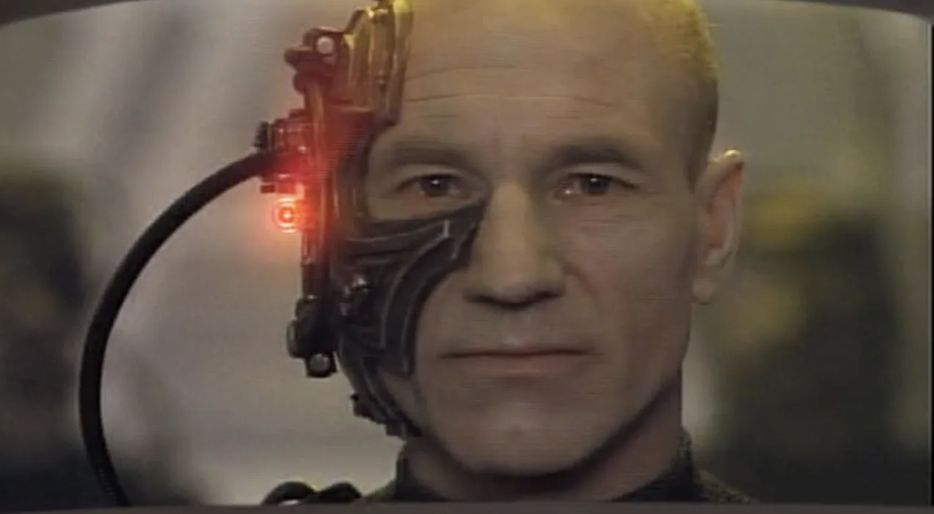
Then came First Contact, which remains not only one of my favorite Star Trek films but one of the finest cinematic portrayals of male trauma I've ever seen.
There is a scene in which Picard, consumed by rage toward the Borg, refuses to destroy the Enterprise rather than surrender it to them.
His fury is terrifying.
"Jean-Luc, blow up the damn ship!"
"NO! NO!!!!!!"
SMASH into the glass…
"You broke your little ships.”
Lily, played by the great Alfre Woodard, sees what Picard cannot.
The Borg hurt him. They violated him. They took away his autonomy and humanity. And now, driven by his need to hurt them back, he's prepared to sacrifice everything. Even the people he has sworn to protect.
I know that rage. I know what it's like to carry pain that can, if you're not careful, become something destructive.
I've sometimes wondered how much of his own personal history Stewart brought into that performance. I can't know, of course. But watching him in that scene, I recognize something painfully human.
At our worst moments, any one of us can become Picard in that room. And at our best, perhaps we can find the courage to recognize what we're doing before it's too late.
That is powerful storytelling. That is powerful acting.
And that is one of the reasons I love this man.
An Extraordinary Life on Stage and Screen
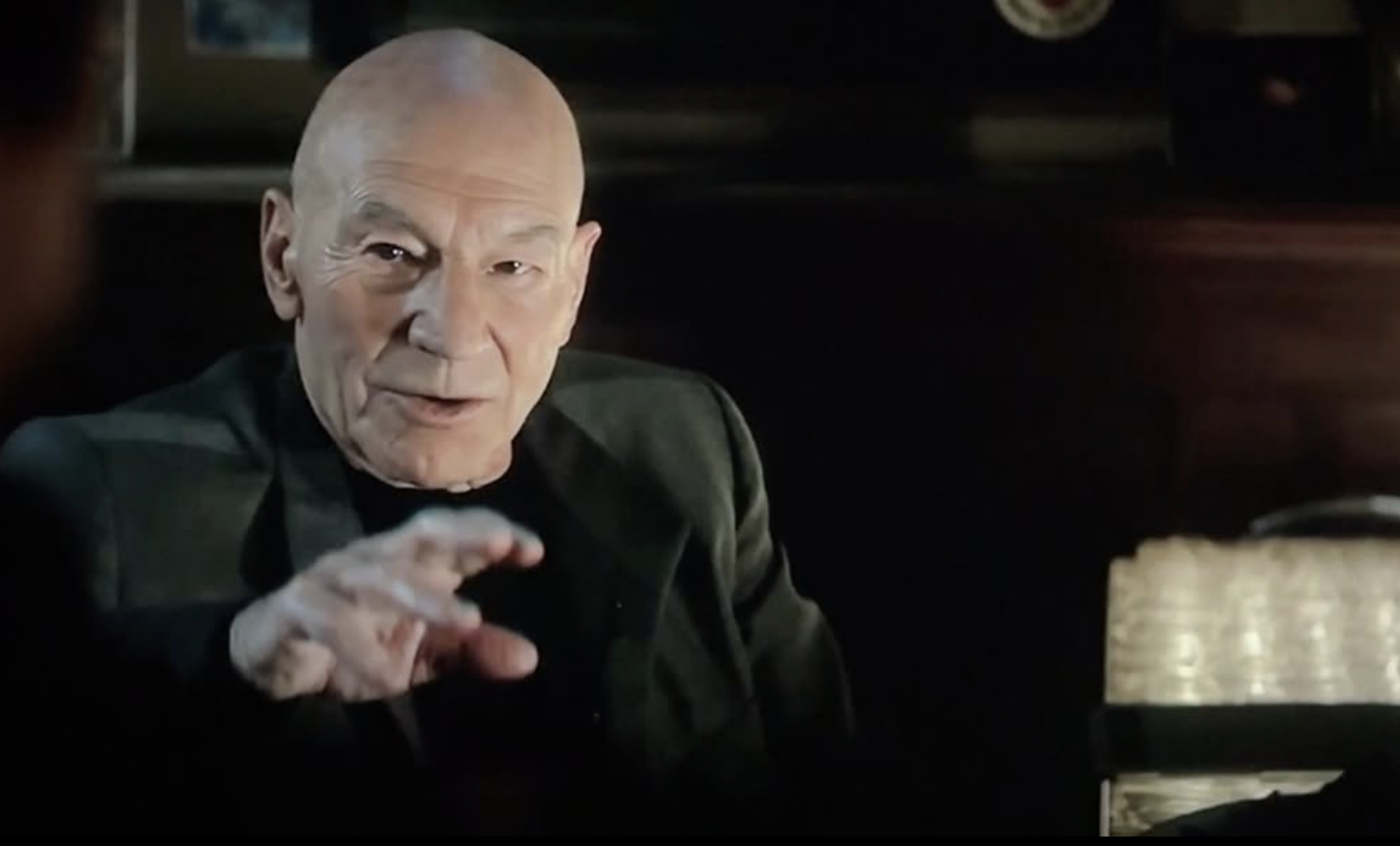
Of course, Patrick Stewart's career was so much more than Star Trek.
There was Shakespeare, the Royal Shakespeare Company, I, Claudius, David Lynch's Dune, and an extraordinary stage career spanning decades.
Then, when many actors might have been slowing down, he found an entirely new generation of fans as Professor Charles Xavier in the X-Men films.
And let's not forget his chilling performance in Green Room, in which he took those familiar qualities of authority, intelligence, and leadership and twisted them into something genuinely frightening.
What range!
And…the man had a wonderful sense of humor!
Extras. Family Guy. American Dad!
This distinguished Shakespearean actor could be gloriously, outrageously goofy. He took the work seriously, but learned not to take himself too seriously. There's a lesson in that, too.
I also admired his generosity as a performer.
The Next Generation was an ensemble. Picard was its captain, but Patrick Stewart understood that the strength of the show came from the entire company. And by all accounts, what began as a sometimes difficult relationship with his fellow actors became a remarkable lifelong family.
As actors, we must remember that generosity is part of the job.
The scene isn't just about you. It's about you AND your scene partner.
Acting isn't a competition. It's a collaboration.
The Farewell We Deserved
After First Contact, we got Insurrection and Nemesis.
The less said about those two, the better.
I remember sitting in the theater watching Nemesis in 2002, feeling terribly sad. Not just because of what happened to Data, but because I feared this was how Jean-Luc Picard's story would end. What a disappointing way to say goodbye.
For years, I simply considered First Contact the proper ending.
Then, in 2020, Patrick Stewart returned to the role in Star Trek: Picard.
I'll be completely candid: the first couple of episodes didn't work for me, and I stopped watching.
But then came Season 3.
My God.
There it was. The final Next Generation movie I had waited decades to see.
Not an eighth season of the television show, but the cinematic farewell this wonderful cast deserved. And Patrick Stewart gave what I consider one of the greatest performances of his career.
He was older. More vulnerable. More human. The story brought Picard face-to-face with a son he had never known existed.
And they just HAD to name his son Jack, didn't they?

And knowing what Stewart himself had acknowledged about his shortcomings as a father, I couldn't help but see a deeply personal dimension to that performance. The whole man. We must consider the whole man.
The artist. The father. The son. The wounded child. The extraordinary professional. The imperfect human being.
We are shaped by our experiences, but we need not be imprisoned by our patterns. I see that in his life, and I see it in his work. And it makes me admire him all the more.
The Measure of a Man
I also admire something that goes beyond acting.
I didn't agree with Sir Patrick Stewart on every political issue. Not by a long shot.
But you know what?
Jean-Luc Picard taught me that I didn't have to.
He taught me to think critically, to question authority, to defend the dignity of others, and to have the courage to stand by my convictions while recognizing the humanity of people with whom I disagree.
Those values even helped inspire me to make my film Traitor.
Great art doesn't demand that we all think alike. It challenges us to think.
And Patrick Stewart helped teach me that.
I remember reading an interview in which someone asked him whether it bothered him that Star Trek fans might come to see him performing Shakespeare simply because they wanted to see Captain Picard.
His attitude, as I remember it, was wonderfully generous. Why should that bother him? If Star Trek brought people into the theater, perhaps Shakespeare could keep them there.
In recent years, I've watched interviews with Jonathan Frakes, Brent Spiner, and the rest of his extraordinary colleagues. And since his passing, the outpouring of love from the people who knew him and worked with him has been deeply moving.
Not merely admiration for an extraordinary actor.
Love for a human being.
And that, ultimately, is what matters.
One More Voyage
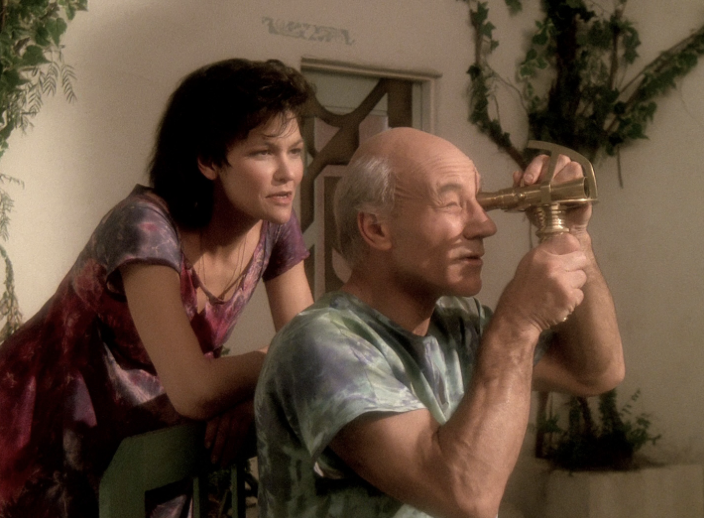
“The Inner Light,” maybe the greatest episodes of “TNG” that taught me to be grateful for the time on Terra Prime.